
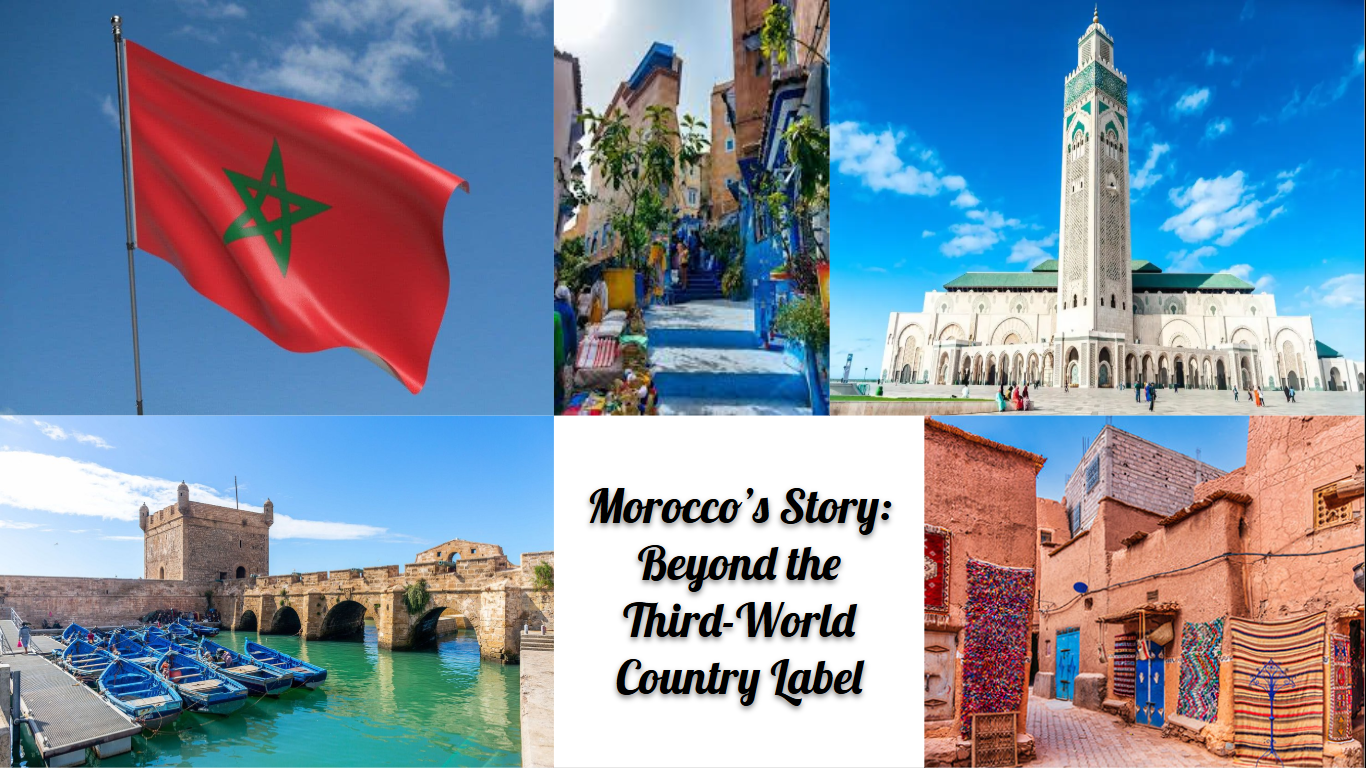
When discussing Morocco, many people are quick to categorize the country as a Third-World nation. Although Morocco has a lower average income than some countries, this doesn’t automatically make it a Third-World nation. In this post, we explore the truth about Morocco’s classification and whether it remains safe for visitors.
Defining Third-World Country
The term “third-world country” originated during the Cold War to describe nations not aligned with the capitalist first world or communist second world. Today, it refers to countries with lower economic development, higher poverty, and limited access to essential services like education and healthcare.
In recent years, the term has become somewhat outdated and even offensive to some people. Many prefer the use of “developing country” or “low-income country” instead. However, labeling a country as third-world doesn’t always reflect its current economic, political, or social reality.
Morocco has often been labeled a third-world country because of its lower economic development and high poverty rates. However, in recent years, Morocco has made significant strides in improving its economic situation. Its GDP has grown by an average of 4% annually, and its poverty rate has decreased from over 15% in 2004 to 4.8% in 2021. Additionally, Morocco has invested in its infrastructure, education, and healthcare systems, further boosting its economic potential.
The History of Morocco’s Classification
During the Cold War, Morocco was classified as a third-world country based on its alignment with neither capitalist nor communist blocs. At the time, Morocco was considered a neutral nation, leading to its classification as a third-world country.
However, since then, the definition of a third-world country has evolved. Today, it is defined as a country that is economically underdeveloped, has a low standard of living, and lacks access to resources and services.
In recent years, Morocco has made notable economic and social progress, shifting its classification. Tourism growth has boosted jobs and improved infrastructure.
Despite these developments, Morocco still faces challenges related to poverty, inequality, and unemployment, particularly in rural areas. However, the government has implemented various initiatives to address these issues and has made strides in reducing poverty levels.
Overall, while Morocco may have been classified as a third-world country in the past, the country’s current economic and social development indicates that it is rapidly moving towards becoming a fully developed nation.
Economic Status of Morocco
Morocco’s economic status has been steadily improving over the years, challenging its classification as a third-world country. The country has implemented various reforms and policies to stimulate economic growth and reduce poverty rates.
One key indicator of Morocco’s economic progress is its Gross Domestic Product (GDP), which has experienced consistent growth. The country has seen an average annual GDP growth rate of 4%, driven by sectors such as tourism, agriculture, and manufacturing. Morocco’s strategic location, connecting Europe and Africa, has played a significant role in attracting foreign investments and fostering trade relationships.
In addition to GDP growth, Morocco has made significant investments in infrastructure development. The government has allocated funds to improve transportation networks, modernize ports, and enhance the country’s energy capacity. These initiatives have not only facilitated trade but also contributed to job creation and economic diversification.
Furthermore, Morocco has made notable advancements in social welfare programs and poverty reduction. The poverty rate in the country has declined significantly, from over 15% in 2004 to 4.8% in 2021. The government has implemented targeted initiatives to provide access to healthcare, education, and social support, contributing to improved living conditions for its citizens.
While challenges still remain, Morocco’s economic trajectory indicates its transition from a third-world country to a developing nation. The country’s commitment to economic reforms and its favorable business environment have attracted global attention, making it an increasingly attractive destination for investment and trade. With sustained economic growth and poverty reduction efforts, Morocco is positioning itself as a rising economic power in the region.
Safety and Security in Morocco
Morocco is a country that is generally considered safe for travelers. Like any country, there are areas that are less safe than others, but overall, Morocco has a low crime rate and a friendly and welcoming population. In fact, Morocco is a popular tourist destination, with millions of people visiting every year.
However, as with any foreign country, travelers should take certain precautions to ensure their safety. These precautions include avoiding deserted areas at night, being aware of your surroundings, and avoiding public demonstrations.
Additionally, travelers should be aware of the threat of terrorism in Morocco. In 2011, the country experienced a terrorist attack in Marrakech that killed 17 people. Since then, there have been a few isolated incidents of terrorism in the country, but overall, the threat remains low.
To ensure a safe and enjoyable trip to Morocco, it is recommended that travelers research the areas they plan to visit, stay alert to their surroundings, and take any necessary precautions to protect their safety. With these measures in mind, travelers can have a wonderful experience in Morocco without worry.
Morocco’s Tourism Industry
Despite being classified as a third-world country, Morocco’s tourism industry has been growing steadily in recent years. Morocco features a diverse landscape, from the Sahara Desert to the Atlas Mountains, and a rich cultural heritage in cities like Marrakech, Fez, and Rabat. This has made it an attractive destination for tourists from all over the world.
Tourism plays a major role in Morocco’s economy, contributing nearly 10% of GDP and creating many jobs. The government supports growth by investing in infrastructure and promoting Morocco’s unique culture and natural attractions.
Tourists in Morocco can explore historic cities and its vibrant arts and crafts. They can also hike or camp in the desert and mountains. The country also offers a range of accommodation options, from traditional riads to luxury resorts.
Some travelers worry about safety in Morocco. The government, however, has introduced measures to protect and secure tourists. It is advisable to take basic precautions, such as staying in well-lit areas and avoiding carrying large amounts of cash.
Overall, Morocco’s tourism industry is a significant contributor to the country’s economy and provides a unique travel experience for visitors.