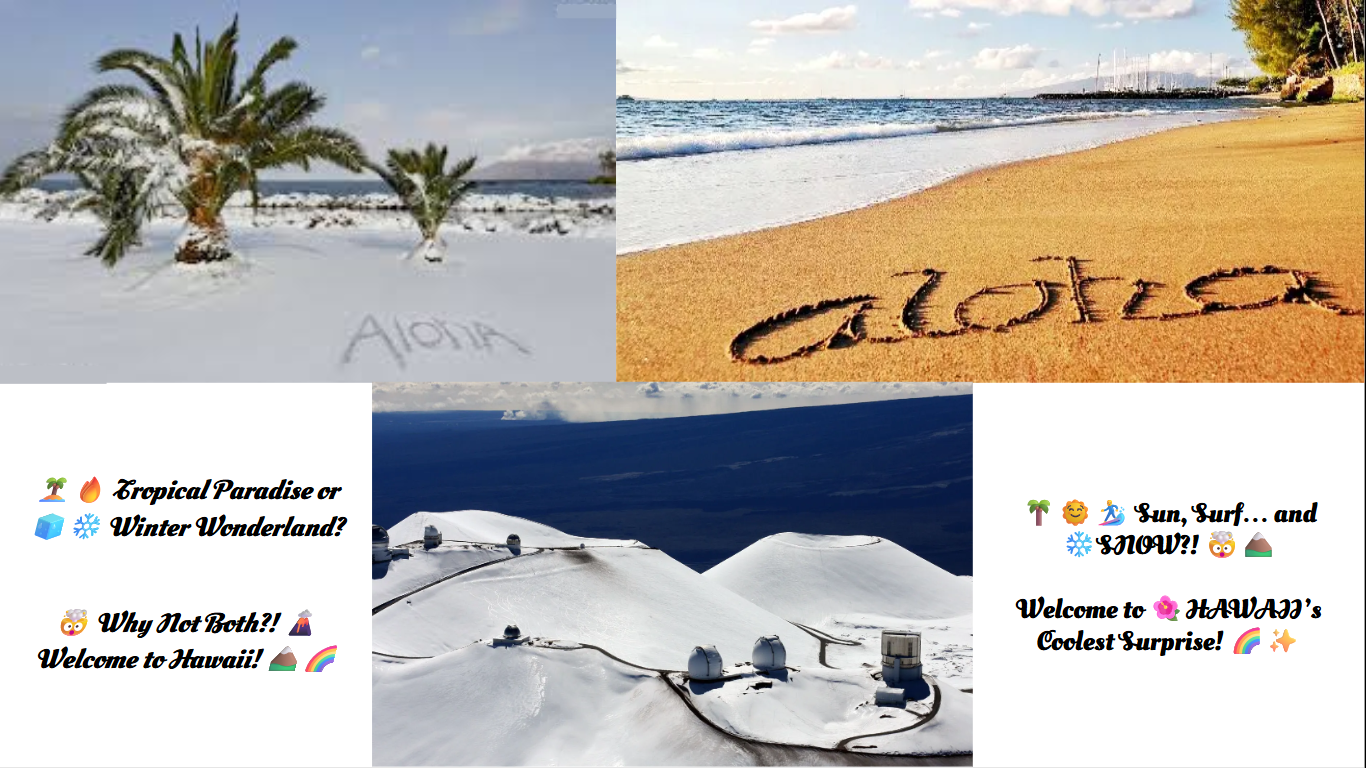
Did you know that snow in Hawaii is a real phenomenon? Believe it or not, the 50th state of the USA can get quite chilly. Sometimes, it even snows! If you thought you knew everything about Hawaii, think again. The islands experience snow in some areas. In this blog, we’ll explore why and where it snows in Hawaii. Plus, we’ll show you how to enjoy this rare and surprising treat. Read on to find out more about snow in the Sunshine State!
Hawaii’s Unexpected Weather: When the Sunshine State Sees Snow
When we think of Hawaii, we imagine sunshine, crystal clear waters, and sandy beaches. However, the weather in Hawaii can be unpredictable and often surprising. The island’s unique location and topography result in a variety of climates and weather patterns. Visitors can experience rain, thunderstorms, high winds, and even snow!
Though Hawaii is famous for its tropical climate, some high peaks have a subarctic climate due to their elevation. The tallest mountain in Hawaii, Mauna Kea, stands at 13,803 feet and regularly experiences snowfall during the winter months. Snow on Hawaii’s peaks contrasts with sunny beaches and attracts visitors eager to experience the island’s winter wonderland.
Hawaii’s weather surprises go beyond snow. The islands can also experience powerful storms and hurricanes. Kauai holds the record for the most rainfall in one day—an incredible 49.7 inches in 24 hours.
Hawaii’s unexpected weather often surprises visitors but shows its diverse, dynamic environment. Whether chasing sun or snow, always check the forecast and be ready for anything.
Understanding Hawaii’s Unique Climate
Many people assume that Hawaii is always sunny and warm, but that’s not necessarily the case. Hawaii’s unique climate is shaped by its central location in the Pacific Ocean.
Hawaii has a tropical climate, but there are differences between the islands due to their location and elevation. The Big Island has 11 different climate zones, while Maui has five. The elevation also affects the climate, with higher elevations being cooler and wetter.
Trade winds from the northeast shape Hawaii’s weather and keep temperatures mild. The trade winds bring moisture to the islands, which is why some areas, such as the Hilo side of the Big Island, can be quite rainy.
Winter (November to April) is usually cooler and rainier than summer (May to October). Temperatures rarely fall below 60°F. But at high elevations like Mauna Kea and Mauna Loa, snow can occur.
Overall, Hawaii’s climate is unique and can vary depending on location and elevation. It’s important for visitors to research the weather and climate of their specific destination to properly prepare for their trip.
Snowy Peaks: Yes, It Does Snow in Hawaii!
When most people think of Hawaii, they picture white sand beaches and crystal-clear waters, but did you know that this tropical paradise also has snow-capped peaks? That’s right, Hawaii’s tallest mountains can experience snowfall during the winter months.
Mauna Kea and Mauna Loa, both located on the Big Island of Hawaii, are the two tallest mountains in the state and both receive snowfall during the winter. Mauna Kea, standing at 13,803 feet above sea level, is particularly known for its snow-capped summit, which can be seen from miles away. The mountain’s summit is home to some of the world’s most advanced telescopes, making it a popular destination for stargazing enthusiasts.
While snowfall in Hawaii may be rare, it’s a reminder of the state’s diverse climate and geography. Visitors can even participate in activities such as snowboarding, skiing, and snowshoeing during the winter months, making for a truly unique vacation experience.
If you’re planning a trip to Hawaii during the winter months, don’t forget to pack warm clothing and check local weather forecasts to see if there’s a chance of snow during your visit. You won’t want to miss the chance to witness this unexpected natural wonder.
From Beaches to Snowy Peaks: Hawaii’s Coolest Winter Surprise
When most people think of Hawaii, they imagine pristine beaches and swaying palm trees, but there’s more to the islands than just sand and sun. If you’re lucky enough to visit during the winter months, you might just catch a glimpse of Hawaii’s winter wonderland.
The best place to see snow in Hawaii is atop Mauna Kea and Mauna Loa on the Big Island. These dormant volcanoes rise over 13,000 feet, with snowy peaks in winter. You can drive to Mauna Kea’s summit, but a four-wheel drive is recommended due to steep, tricky roads.
Another great place to see snow in Hawaii is on Haleakala, a dormant volcano on Maui. Haleakala rises to over 10,000 feet and is often dusted with snow during the winter months. You can drive to the summit of Haleakala, or if you’re feeling adventurous, you can hike one of the trails that lead to the top.
No matter where you choose to go, seeing snow in Hawaii is a unique and unforgettable experience. Just make sure to dress warmly and bring plenty of water and snacks, as the high altitude and cold temperatures can be challenging for some visitors.
Yes, Snow in Hawaii! Chill Adventures & Hot Tips for Visitors
Snow in Hawaii is a rare and magical event that many visitors may never experience. But for those who are lucky enough to witness this winter wonderland, there are plenty of activities to enjoy. Here are some tips and ideas for making the most of your snowy Hawaiian adventure:
1. Bundle up! Even though Hawaii is known for its warm weather, temperatures can drop significantly in high elevation areas, where snow is more likely to fall. Be sure to bring warm clothing, including a heavy jacket, gloves, and a hat.
2. Take a hike. Many of Hawaii’s stunning hiking trails offer spectacular views of snow-covered mountains and valleys. Popular options include Haleakala National Park on Maui and Mauna Kea on the Big Island.
3. Go sledding. If you’re traveling with kids, they’ll love sledding down the slopes of Hawaii’s snowy peaks. Make sure to bring your own sled or rent one from a nearby store.
4. Take a guided tour. Local guides are a great resource for exploring Hawaii’s snow-covered landscapes. They can take you to the best viewing spots and offer insights into the area’s unique geology and history.
5. Embrace the chill. Enjoy hot cocoa or warm coffee at one of Hawaii’s cozy cafes or restaurants. It’s the perfect way to warm up and relax after a day of snowy adventures.
Overall, Hawaii’s snow may come as a surprise to some visitors, but it’s a beautiful and unforgettable experience that shouldn’t be missed. With these tips and ideas, you’ll be prepared to make the most of your Hawaiian winter wonderland adventure.